The naked eye
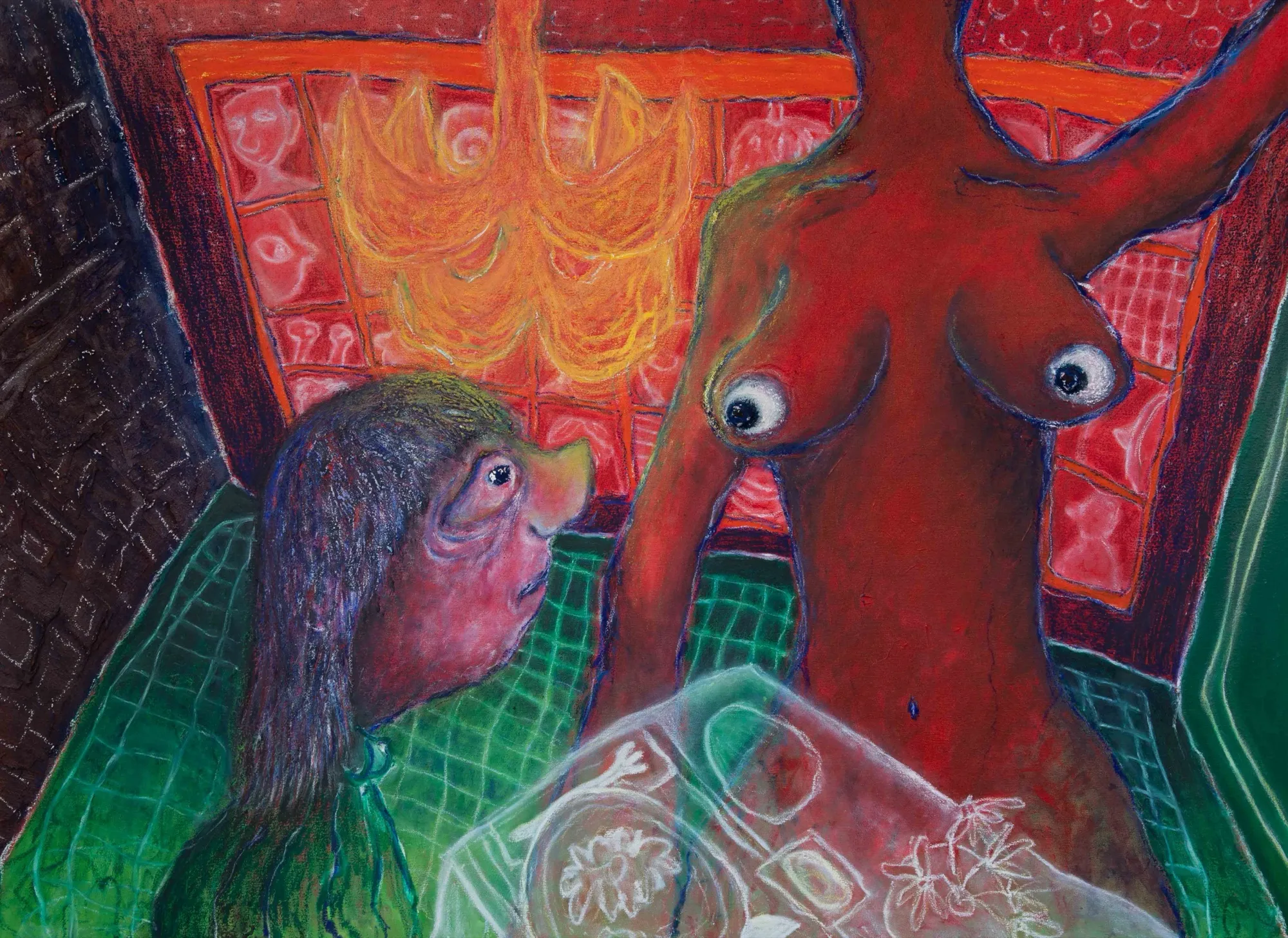
In The Naked Eye, Elmúdesi inverts and complicates the classical logic of the gaze. A female figure occupies the center of the scene; her breasts turn into eyes that return the gaze with intensity toward a small purple figure, cornered within an unstable interior. The symbolic inversion is deliberate: it is no longer the female body that is offered up for observation, but the one that looks back, fundamentally questioning who holds visual power.
This gesture enters into explicit dialogue with John Berger's distinction between the nude and the naked: while the former, as an artistic category, has historically been arranged for the contemplation and objectification of others, the latter refers to a presence that exists in its own right, not for consumption. Elmúdesi works within that margin: she transforms the body into an active subject of the gaze, and in doing so exposes the codes that sustain objectification.
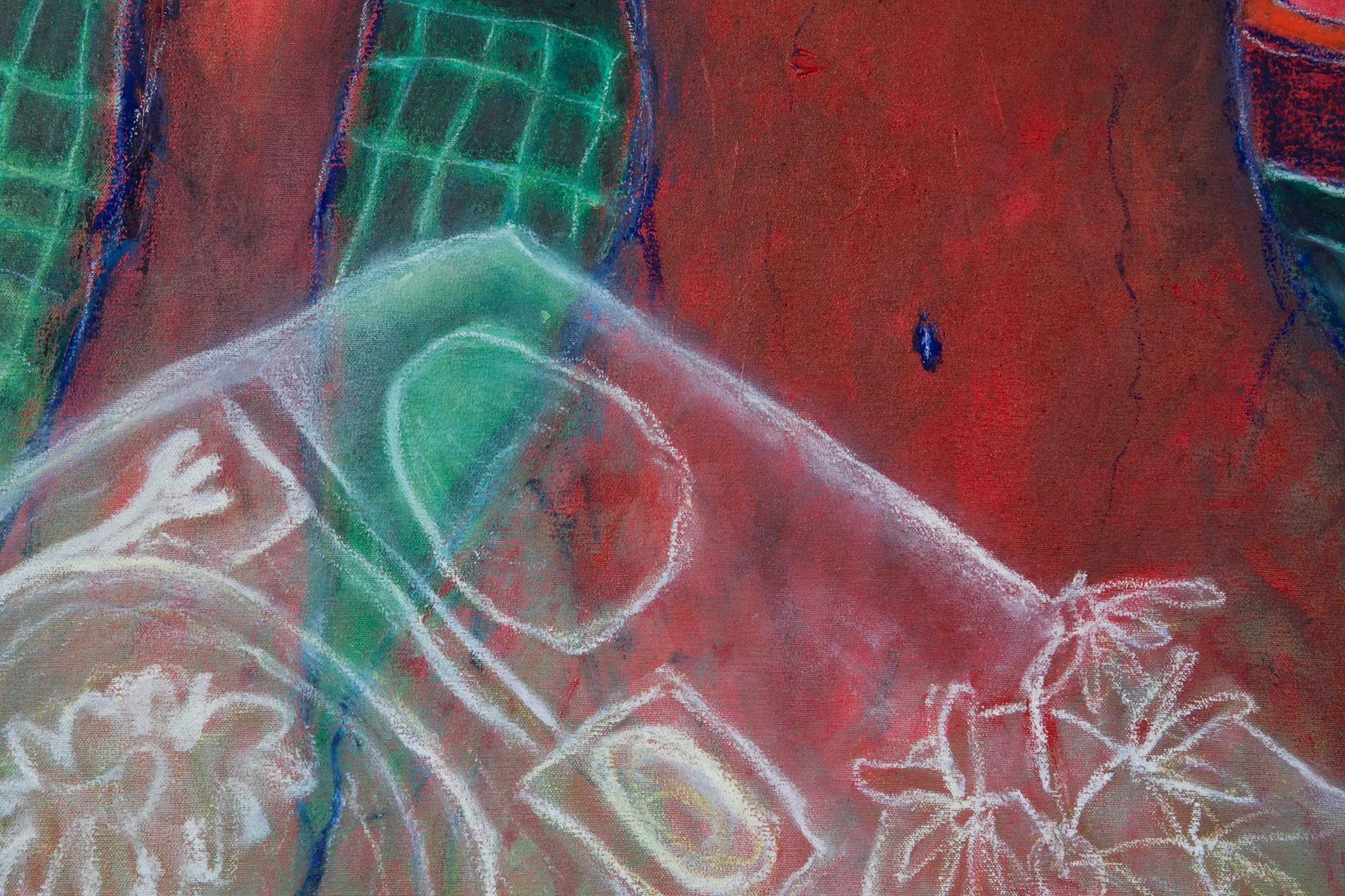
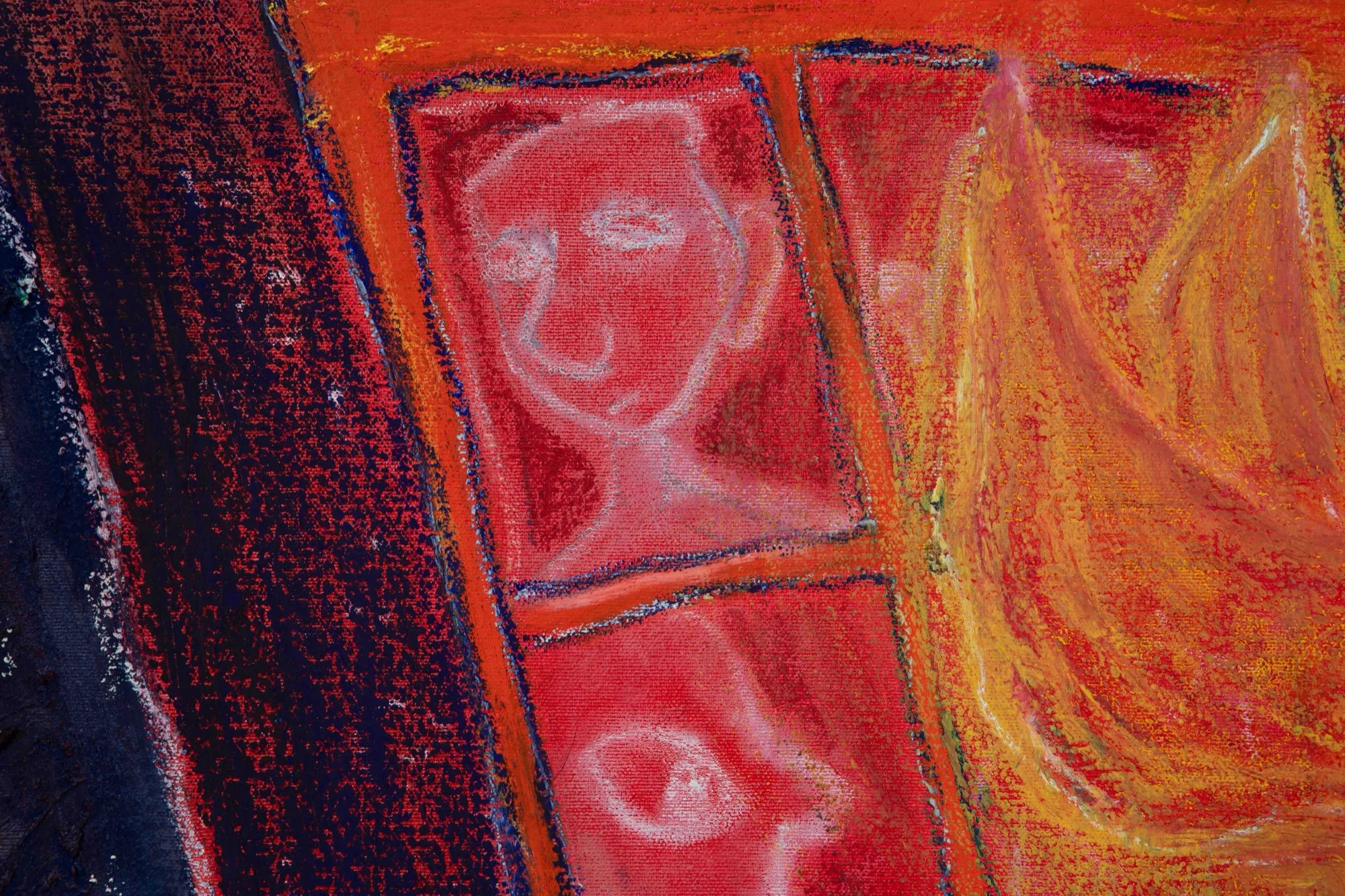
The painting, without sentimentality, also explores the internalization of that gaze: external surveillance turning into self-inspection, the tension between humiliation and recognition. The small purple figure acts as a counterpoint: vulnerable, but also a point from which hierarchies are re-read. The chromatic contrasts and the instability of the space emphasize the precariousness of that position.
In its dual intention, provocative and reflective, the work does not only subvert an iconographic tradition: it forces the viewer to question their own place in relation to the image. Looking at The Naked Eye therefore means having to answer: who looks, and who is looked at, when the gaze is no longer one-directional but part of a circuit of power and recognition?